
Billboard Hot 100 | Top 5 – Week of July 25, 1960
The Billboard Hot 100 for the week ending July 25, 1960 showed Brenda Lee holding firmly at #1 with “I’m Sorry,” while Roy Orbison surged to #2 with “Only The Lonely (Know How I Feel).” That combination made this one of the most emotionally powerful chart weeks of the summer.
Brenda Lee was still only a teenager, yet “I’m Sorry” had already established her as one of the most mature and expressive pop vocalists of 1960. Just below her, Orbison’s dramatic breakthrough ballad was introducing listeners to one of the most unusual voices in American popular music.
The rest of the Top 5 showed the variety of midsummer radio. Hollywood Argyles slipped to #3 with the novelty smash “Alley-Oop,” Connie Francis remained strong at #4 with her historic hit “Everybody’s Somebody’s Fool,” and Brian Hyland jumped to #5 with the fast-rising summer novelty record “Itsy Bitsy Teenie Weenie Yellow Polkadot Bikini.”
The week of July 25, 1960 captured a chart split between deep heartbreak and playful summer fun. Brenda Lee, Roy Orbison, Connie Francis, Ray Peterson, and Hank Locklin brought emotional drama, while Hollywood Argyles and Brian Hyland kept novelty pop alive near the top.
Top 5 Songs (July 25, 1960)
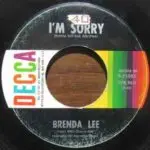
1. “I’m Sorry” – Brenda Lee
Brenda Lee remained at #1 with “I’m Sorry,” one of the defining heartbreak ballads of 1960.
The song’s power came from the contrast between Lee’s youth and the emotional maturity of her vocal performance. She delivered the lyric with restraint, sadness, and control far beyond what many listeners expected from a teenage singer.
“I’m Sorry” helped move Lee beyond her earlier image as a high-energy young rocker and positioned her as a serious pop vocalist capable of carrying dramatic ballads.
By this week, the song was no longer just a hit. It had become one of Brenda Lee’s signature recordings.
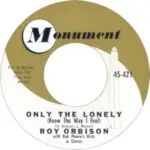
2. “Only The Lonely (Know How I Feel)” – Roy Orbison
Roy Orbison climbed to #2 with “Only The Lonely,” one of the most important breakthrough records of his career.
The song introduced the dramatic vocal style that would make Orbison one of the most distinctive singers of the 1960s. His voice moved from quiet vulnerability to soaring emotional intensity in a way that felt almost operatic.
The record also helped define Orbison’s lonely, cinematic ballad style. Instead of sounding like a typical teen idol, he sounded mysterious, wounded, and completely original.
Its rise to #2 showed that listeners were ready for a deeper and more dramatic kind of pop heartbreak.
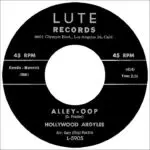
3. “Alley-Oop” – Hollywood Argyles
Hollywood Argyles slipped to #3 with “Alley-Oop,” but the novelty hit remained one of the most recognizable records of the summer.
Built around the comic-strip caveman character, the song used humor, chanting, and a stomping rhythm to create a record that sounded unlike anything else near the top of the chart.
Its success showed how strongly novelty records could connect when they were funny, simple, and instantly memorable.
Even as emotional ballads dominated much of the Top 10, “Alley-Oop” kept the chart playful and unpredictable.
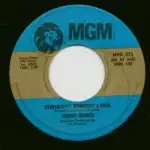
4. “Everybody’s Somebody’s Fool” – Connie Francis
Connie Francis held the #4 position with “Everybody’s Somebody’s Fool,” the historic ballad that had recently made her the first solo female artist to reach #1 on the Billboard Hot 100.
The song remained a major radio favorite because of its polished arrangement, emotional lyric, and Francis’ expressive vocal delivery.
Its continued presence near the top showed that Francis’ chart breakthrough had real staying power.
With Brenda Lee at #1 and Connie Francis still in the Top 5, female vocalists were clearly shaping the sound of summer 1960.
5. “Itsy Bitsy Teenie Weenie Yellow Polkadot Bikini” – Brian Hyland
Brian Hyland jumped into the Top 5 with “Itsy Bitsy Teenie Weenie Yellow Polkadot Bikini,” one of the most famous novelty-pop records of the early 1960s.
The song’s playful story about a shy girl and her tiny swimsuit made it a perfect summertime radio hit.
Its catchy title, lighthearted arrangement, and singalong quality helped it race up the chart quickly.
By this week, the record was clearly becoming one of the season’s biggest pop sensations and was positioned for an even stronger run in August.
More Weeks at #1 for “I’m Sorry”
This song spent multiple weeks at #1 on the Billboard Hot 100. Explore each chart week below:
🎂 What Was the #1 Song on Your Birthday?
If you were born during the week ending July 30, 1960, this was your birthday song:
🎵 I’m Sorry by Brenda Lee
▶ Watch and experience this song →
🎂 Try your own birthday:
Billboard Hot 100 Top 10 – Week of July 25, 1960
- I’m Sorry – Brenda Lee
- Only The Lonely (Know How I Feel) – Roy Orbison
- Alley-Oop – Hollywood Argyles
- Everybody’s Somebody’s Fool – Connie Francis
- Itsy Bitsy Teenie Weenie Yellow Polkadot Bikini – Brian Hyland
- Mule Skinner Blues – The Fendermen
- Image Of A Girl – Safaris with The Phantom’s Band
- Tell Laura I Love Her – Ray Peterson
- Please Help Me, I’m Falling – Hank Locklin
- That’s All You Gotta Do – Brenda Lee
Heartbreak Ballads and Summer Novelty Hits Shared the Chart
The Billboard Hot 100 for July 25, 1960 was built around contrast.
At the top, Brenda Lee and Roy Orbison gave the chart two deeply emotional records with very different vocal styles. Lee’s “I’m Sorry” was polished, controlled, and heartbreaking, while Orbison’s “Only The Lonely” sounded dramatic, lonely, and almost cinematic.
At the same time, Brian Hyland and Hollywood Argyles kept the summer mood light with novelty records that were playful, catchy, and impossible to ignore. That mix of sadness and fun made the chart feel especially alive.
The lower half of the Top 10 added even more depth. The Fendermen brought raw country-blues energy, Ray Peterson introduced teenage tragedy with “Tell Laura I Love Her,” Hank Locklin brought country crossover into the pop Top 10, and Brenda Lee placed a second song on the chart with “That’s All You Gotta Do.”
The week of July 25, 1960 remains a strong example of how broad early 1960s pop had become — one chart could hold heartbreak, novelty, country, rockabilly, doo-wop harmony, and teenage tragedy all at once.