
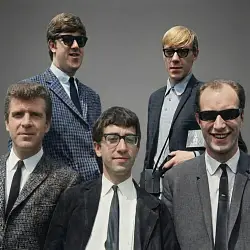
About Freddie and the Dreamers
Freddie and the Dreamers were an English beat group from Manchester who became one of the more lighthearted and entertaining acts of the British Invasion. Led by energetic frontman Freddie Garrity, the group blended pop, rock, and comedy into a stage show that stood apart from many of their contemporaries.
Known for Garrity’s wild dancing and humorous performances, the band built a loyal following in both the United Kingdom and the United States during the mid-1960s. Their playful image helped make them one of the most memorable acts of the era.
Freddie and the Dreamers Number One Songs
Freddie and the Dreamers reached #1 on the Billboard Hot 100 with one of the defining British Invasion hits of the mid-1960s.
Why Freddie and the Dreamers Mattered in the 1960s
Freddie and the Dreamers mattered because they showed that the British Invasion was not just about serious rock bands—it could also include humor, personality, and audience interaction. Their hit “I’m Telling You Now” brought a fun, upbeat energy that connected strongly with teenage audiences.
The group also became famous for “The Freddie,” a dance craze inspired by Freddie Garrity’s energetic stage movements. Their follow-up song “Do the Freddie” helped turn the dance into a brief national phenomenon in America.
At a time when many British bands were trying to appear cool and polished, Freddie and the Dreamers embraced silliness and entertainment, which helped them stand out in a crowded musical landscape.
Freddie and the Dreamers and the Billboard Hot 100
Freddie and the Dreamers made their biggest impact on the Billboard Hot 100 with “I’m Telling You Now,” which reached #1 in 1965.
The song had originally been a hit in the United Kingdom in 1963, reaching #2 before later being re-released in America during the height of the British Invasion.
The band followed with additional U.S. hits including “Do the Freddie” (#18), “You Were Made for Me,” and “I Understand.”
Their success helped establish Manchester as another important music city during the British Invasion, alongside Liverpool.
Freddie and the Dreamers’ Musical Style
Freddie and the Dreamers blended beat music, pop rock, and rhythm and blues influences into a cheerful and highly accessible sound. Their recordings often featured catchy melodies, upbeat rhythms, and singalong choruses.
What truly set the group apart, however, was their comedic performance style. Freddie Garrity’s exaggerated dancing and playful stage antics became just as famous as the music itself.
This combination of music and comedy helped the group appeal to younger audiences and made them especially popular on television variety shows.
Freddie and the Dreamers’ Lasting Legacy
Freddie and the Dreamers remain one of the most entertaining acts of the British Invasion era. Their signature hit “I’m Telling You Now” continues to be remembered as one of the defining pop songs of the mid-1960s.
They also helped establish the idea that personality and showmanship could be just as important as musical skill in creating a successful pop act.
For fans of 1960s music, Freddie and the Dreamers represent the fun side of the British Invasion—a group that brought laughter, dancing, and pure entertainment to the height of the rock and roll era.