Billboard Hot 100 | Top 5 – Week of March 31, 1962
The final Billboard Hot 100 chart of March 1962 brought another major change at the top as Connie Francis climbed to #1 with “Don’t Break The Heart That Loves You.” After weeks of upbeat dance records and energetic rock and roll dominating the summit, Francis delivered a polished emotional ballad that reminded listeners how powerful classic pop could still be.
Bruce Channel’s “Hey! Baby” slipped to #2 after its successful run at the top, while Shelley Fabares exploded into the Top 3 with “Johnny Angel,” one of the fastest-rising songs of the spring. Roy Orbison also continued climbing with “Dream Baby (How Long Must I Dream),” giving the Top 5 one of its strongest and most distinctive vocal performances.
The rest of the Top 10 reflected the incredible variety of early 1962 radio. Kenny Ball and his Jazzmen kept their jazz instrumental alive near the top, Chubby Checker returned with another Twist-flavored hit, Sam Cooke continued dancing his way up the chart, and Elvis Presley re-entered the Top 10 with “Good Luck Charm.”
This was a fascinating transition chart. The Twist craze still lingered in the background, but the Hot 100 was increasingly becoming a place where polished pop singers, emotional balladeers, vocal groups, jazz records, and rock and roll stars all competed together. March 1962 ended with the chart feeling more open and more diverse than ever.
Top 5 Songs
1. Don’t Break The Heart That Loves You – Connie Francis
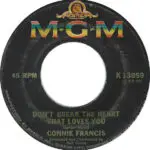
Connie Francis rose from #2 to #1 this week with “Don’t Break The Heart That Loves You,” earning another major hit in one of the most successful careers of the early 1960s. The song combined emotional vulnerability with elegant pop production, creating a record that sounded timeless from the moment it reached radio.
Francis delivered the lyric with remarkable control. Instead of overwhelming the listener with drama, she allowed the melody and emotion to unfold naturally. That restraint gave the song maturity and helped it connect with a broad audience far beyond teenage listeners.
The record’s success proved that traditional pop balladry still had enormous strength during a rapidly changing musical era. Even with dance crazes and rhythm-driven records dominating much of the conversation, Connie Francis could still reach #1 with a beautifully sung heartbreak song.
▶ Watch and experience this song →

2. Hey! Baby – Bruce Channel
After holding the top spot, Bruce Channel slipped to #2 with “Hey! Baby,” but the record remained one of the happiest and most instantly recognizable hits of early 1962. Its harmonica hook and easygoing vocal style kept it sounding fresh even after weeks near the summit.
The song’s charm came from its simplicity. It never tried to sound grand or complicated. Instead, it focused on rhythm, melody, and personality — three things it delivered perfectly. That combination made it one of the defining feel-good records of the year.
“Hey! Baby” also reflected the continuing strength of straightforward pop-rock records during this period. Even as the chart became more stylistically diverse, audiences still responded strongly to songs that simply sounded fun and inviting.
3. Johnny Angel – Shelley Fabares
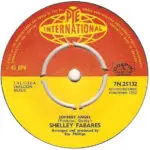
Shelley Fabares made one of the biggest moves of the spring as “Johnny Angel” leaped from #11 to #3. The song captured the dreamy innocence of early 1960s teen pop perfectly, giving the chart one of its sweetest and most romantic moments.
Fabares’ soft vocal delivery gave the record warmth and sincerity. Rather than sounding dramatic, the song felt gentle and hopeful, which helped it connect with young listeners who loved romantic fantasy songs during this era.
The rapid rise of “Johnny Angel” showed that teen-pop ballads still held major commercial power in 1962. Even with rhythm and blues and dance music growing stronger, there was still a huge audience for songs built around youthful emotion and melodic simplicity.

4. Dream Baby (How Long Must I Dream) – Roy Orbison
Roy Orbison climbed from #6 to #4 with “Dream Baby (How Long Must I Dream),” continuing one of the strongest vocal runs on the chart. Orbison’s voice already stood apart from nearly everyone else in popular music, blending emotional intensity with technical control.
The song balanced upbeat rhythm with longing emotion, creating a sound that was both catchy and haunting. Orbison could sound vulnerable and powerful at the same time, which gave his records an emotional depth few singers could match.
“Dream Baby” helped reinforce Orbison’s growing reputation as one of the era’s truly unique artists. While many singers fit neatly into one style, Orbison existed somewhere between rock and roll, pop, country, and emotional opera-like drama.
5. Midnight In Moscow – Kenny Ball and his Jazzmen
Kenny Ball and his Jazzmen slipped from #3 to #5 with “Midnight In Moscow,” but the jazz instrumental remained one of the year’s most unusual success stories. At a time dominated by vocal records, the song’s melodic charm and upbeat arrangement kept it competitive with major pop hits.
The record carried a lively international feel that helped it stand apart from the rest of the chart. Its musicianship, warm melody, and accessible rhythm made it appealing even to listeners who were not normally jazz fans.
The continued success of “Midnight In Moscow” showed how wide-open the Hot 100 still was in early 1962. Instrumentals could still become major crossover hits when they had enough personality and memorable melody.
🎂 What Was the #1 Song on Your Birthday?
If you were born during the week ending March 31, 1962, this was your birthday song:
🎵 Don’t Break the Heart That Loves You by Connie Francis
▶ Watch and experience this song →
🎂 Born in the 60s? Try your own birthday:
- Don’t Break The Heart That Loves You – Connie Francis
- Hey! Baby – Bruce Channel
- Johnny Angel – Shelley Fabares
- Dream Baby (How Long Must I Dream) – Roy Orbison
- Midnight In Moscow – Kenny Ball and his Jazzmen
- Slow Twistin’ – Chubby Checker with Dee Dee Sharp
- What’s Your Name – Don & Juan
- Let Me In – The Sensations
- Good Luck Charm – Elvis Presley With The Jordanaires
- Twistin’ The Night Away – Sam Cooke
Chart Movers This Week
March 1962 Ended With a Wide-Open Chart
The March 31, 1962 Billboard Hot 100 showed how dramatically the charts had changed in only a few months. Connie Francis reached #1 with a polished heartbreak ballad, Bruce Channel kept upbeat pop-rock near the top, and Shelley Fabares introduced a softer teen-pop sound into the Top 3.
At the same time, Roy Orbison brought emotional power, Kenny Ball carried jazz influence, Elvis Presley returned to the Top 10, and Chubby Checker and Sam Cooke kept the Twist movement alive. Very few charts in any era could mix this many different styles together successfully.
That variety is what makes early 1962 so enjoyable to revisit today. The Hot 100 had become unpredictable, colorful, and constantly evolving. Every week felt like a new combination of sounds, personalities, and musical ideas competing for America’s attention.