
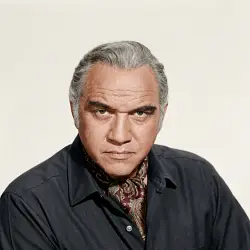
About Lorne Greene
Lorne Greene was a Canadian actor, singer, and television personality best known for his role as Ben Cartwright on the hit western series Bonanza. While primarily recognized for his acting career, Greene achieved remarkable success in the music world during the 1960s with a chart-topping hit that made him one of the most unusual performers to ever reach #1 on the Billboard Hot 100. Lorne Greene
Unlike most pop stars of the era, Greene entered the music charts not as a traditional singer, but as a storyteller. His deep voice and commanding presence translated perfectly into spoken-word recordings, giving his music a distinctive style that set him apart from other artists of the decade.
Lorne Greene Number One Songs
Lorne Greene achieved chart-topping success with one of the most unique songs of the entire 1960s.
Why Lorne Greene Mattered in the 1960s
Lorne Greene mattered because he proved that pop music didn’t always have to follow traditional formats. His hit “Ringo” was largely spoken rather than sung, telling the story of a western outlaw in a dramatic narrative style. This approach made the song stand out in a chart landscape dominated by rock, pop, and Motown acts.
His success also highlighted the influence of television during the 1960s. As a major star of Bonanza, Greene’s popularity helped bring his music to a wide audience, showing how entertainment mediums were beginning to overlap and influence each other.
Lorne Greene and the Billboard Hot 100
Lorne Greene made his biggest impact on the Billboard Hot 100 with “Ringo,” which reached #1 in December 1964 and also topped the Easy Listening chart for six weeks.
The song’s success was particularly notable because of its format. Instead of a traditional vocal performance, “Ringo” featured spoken storytelling with a chorus, making it one of the most unusual #1 hits in chart history.
Greene’s achievement also placed him among the many first-time #1 artists of 1964, a year filled with historic chart activity during the height of the British Invasion.
Lorne Greene’s Musical Style
Lorne Greene’s music blended country, western storytelling, and spoken-word performance. His recordings often featured dramatic narration supported by simple musical backing, creating a style that felt more like a story being told than a traditional song.
“Ringo” is a perfect example of this approach, combining a western narrative with minimal singing and a memorable chorus. The song drew inspiration from earlier spoken-word hits like “Big Bad John,” showing how storytelling remained an important part of early 1960s music.
Lorne Greene’s Lasting Legacy
Lorne Greene remains one of the most unique artists ever to top the Billboard charts. His success with “Ringo” demonstrated that storytelling, personality, and cultural presence could be just as powerful as traditional musical performance.
For fans of 1960s music, Lorne Greene represents a fascinating moment in chart history—a time when a television star could step into the music world and create a number-one hit in a completely unexpected way.