
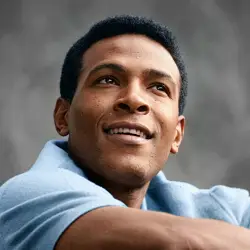
About Marvin Gaye
Marvin Gaye was one of the greatest singers, songwriters, and producers in music history. Known as the “Prince of Motown,” Gaye helped transform soul music during the 1960s and 1970s through his extraordinary voice, emotional performances, and groundbreaking artistic vision.
Born in Washington, D.C., Marvin Gaye began singing in church as a child before eventually signing with Motown Records in the early 1960s. Although he first found success performing material chosen by the Motown hit-making system, Gaye later broke creative boundaries by writing and producing deeply personal albums that changed popular music forever.
With classics ranging from “I Heard It Through the Grapevine” to “What’s Going On,” “Let’s Get It On,” and “Sexual Healing,” Marvin Gaye became one of the defining voices of soul music and one of the most influential artists of the 20th century.
Marvin Gaye Number One Songs
- I Heard It Through the Grapevine
- Let’s Get It On
- Got to Give It Up
Why Marvin Gaye Mattered in the 1960s
Marvin Gaye mattered because he helped elevate soul music into a deeper and more personal art form. During the 1960s, he became one of Motown’s most important stars through a string of hit singles and famous duets with artists like Tammi Terrell, Kim Weston, Mary Wells, and Diana Ross.
His 1968 smash “I Heard It Through the Grapevine” turned him into a superstar and became Motown’s biggest-selling single up to that point.
But Marvin Gaye’s greatest impact came when he broke away from the traditional Motown formula. In 1971, he released What’s Going On, a socially conscious concept album addressing war, poverty, racism, and environmental issues. The album transformed soul music and proved that popular music could tackle serious social themes while still achieving massive commercial success.
His artistic independence later inspired other Motown legends, especially Stevie Wonder, to demand greater creative control over their own music.
Marvin Gaye and the Billboard Hot 100
Marvin Gaye enjoyed one of the most successful chart careers in music history. His version of “I Heard It Through the Grapevine” reached #1 on the Billboard Hot 100 in 1968 and remained there for seven weeks.
The song became Motown’s biggest-selling single at the time and remains one of the defining recordings of the soul era.
He later scored additional #1 hits with “Let’s Get It On” and “Got to Give It Up,” while also producing legendary songs such as “How Sweet It Is (To Be Loved by You),” “Mercy Mercy Me (The Ecology),” “Inner City Blues,” and “Sexual Healing.”
His comeback hit “Sexual Healing” in 1982 earned Marvin Gaye his first competitive Grammy Awards and introduced his music to a new generation of listeners.
Marvin Gaye’s Musical Style
Marvin Gaye’s music blended soul, rhythm and blues, jazz, gospel, funk, and orchestral pop into a style that was both emotionally intimate and musically sophisticated. His voice was remarkably versatile, capable of smooth romantic vocals, soaring falsetto passages, and deep gospel-inspired intensity.
He also became known for innovative studio techniques, especially layering and overdubbing his own vocals to create rich harmonies and emotional depth.
Albums like What’s Going On, Let’s Get It On, and Here, My Dear pushed soul music into more artistic and personal territory, influencing generations of R&B, neo-soul, quiet storm, funk, and hip-hop artists.
Marvin Gaye’s Lasting Legacy
Marvin Gaye remains one of the most influential artists in music history. His recordings helped shape modern soul music while also changing expectations for what popular music could express emotionally, politically, and artistically.
He was inducted into the Rock and Roll Hall of Fame in 1987, the Songwriters Hall of Fame, and received a Grammy Lifetime Achievement Award among many other honors.
Although his life ended tragically in 1984 when he was shot and killed by his father, Marvin Gaye’s music continues to influence artists across every genre.
For fans of 1960s music, Marvin Gaye represents artistic evolution and emotional honesty—an artist who transformed Motown from a hit factory into a platform for some of the most important music ever recorded.