
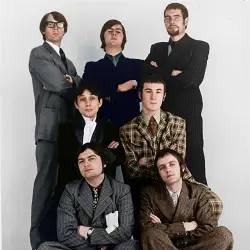
About The New Vaudeville Band
The New Vaudeville Band were an English novelty music group created in 1966 by songwriter and producer Geoff Stephens. Inspired by the sounds of 1920s British music hall and vaudeville entertainment, the group combined vintage musical styles with modern pop production to create one of the most unusual hits of the 1960s.
Originally assembled as a studio project rather than a real touring band, The New Vaudeville Band unexpectedly became an international sensation after the release of their breakthrough hit. Once the song exploded in popularity, a full touring group had to be quickly assembled to meet demand.
The New Vaudeville Band Number One Songs
The New Vaudeville Band reached #1 on the Billboard Hot 100 with one of the most distinctive novelty recordings of the decade.
Why The New Vaudeville Band Mattered in the 1960s
The New Vaudeville Band mattered because they brought an entirely different sound into mainstream pop during the height of the British Invasion. Their hit “Winchester Cathedral” revived the style of old British music hall songs and combined it with modern studio recording techniques.
At a time when psychedelic rock and electric guitar bands were dominating the charts, The New Vaudeville Band succeeded with a playful throwback sound featuring brass instruments, banjo-style rhythms, and vocals designed to imitate 1920s singer Rudy Vallée.
Their success also reflected a growing trend in British pop culture during the late 1960s: nostalgia for earlier eras of British entertainment and music hall traditions.
The New Vaudeville Band and the Billboard Hot 100
The New Vaudeville Band made history with “Winchester Cathedral,” which reached #1 on the Billboard Hot 100 in December 1966 and remained there for three weeks.
The song also reached the Top 5 in the United Kingdom and sold more than three million copies worldwide, becoming one of the biggest novelty hits of the decade.
Remarkably, the song interrupted major chart runs by both The Supremes and The Beach Boys during one of the most competitive periods in 1960s pop music.
The recording also won the 1967 Grammy Award for Best Contemporary (R&R) Recording, further cementing its place in music history.
The group followed with additional hits including “Peek-a-Boo” and “Finchley Central,” showing they were more than simply a one-hit novelty act.
The New Vaudeville Band’s Musical Style
The New Vaudeville Band blended novelty pop, British music hall, jazz-age dance music, and modern studio production into a highly distinctive sound. Their recordings often featured brass sections, banjo-style instrumentation, and theatrical vocals designed to sound as though they were coming through an old-fashioned megaphone.
“Winchester Cathedral” became famous for singer John Carter’s unusual vocal delivery, which imitated the sound of 1920s crooner Rudy Vallée.
This mixture of nostalgia and humor helped define what some critics later called “newstalgia,” a brief but memorable musical trend of the late 1960s.
The New Vaudeville Band’s Lasting Legacy
The New Vaudeville Band remain one of the most unusual success stories of the 1960s. Their signature hit “Winchester Cathedral” continues to be remembered as one of the defining novelty recordings of the era.
The song also helped inspire later experiments with nostalgia-based pop music and theatrical British songwriting styles that would appear in works by artists such as The Beatles and The Bonzo Dog Doo-Dah Band.
For fans of 1960s music, The New Vaudeville Band represent creativity and unpredictability—a group that turned a playful throwback idea into a worldwide chart-topping phenomenon.