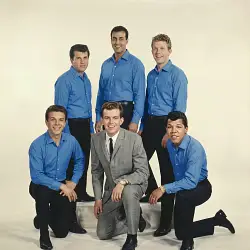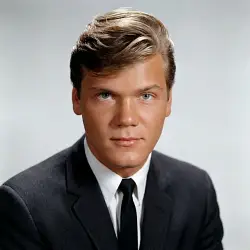
When “Roses Are Red (My Love)” by Bobby Vinton became a #1 hit in 1962, it launched Bobby Vinton into stardom and helped define the sound of early 1960s romantic pop.
But behind its smooth, heartfelt delivery is a story of persistence—and a recording that almost didn’t happen.
✍️ A Song with a Simple Message
“Roses Are Red (My Love)” was written by Paul Evans and Al Byron.
The song’s concept was straightforward:
A promise of love and devotion, expressed through simple, familiar imagery.
The title itself echoes a classic rhyme, giving the song an instantly recognizable and comforting feel.
🎙️ A Recording Saved at the Last Minute
At the time, Bobby Vinton was struggling to gain traction in his career. His early releases hadn’t made a major impact, and his label was considering dropping him.
In a last attempt to find success, Vinton recorded “Roses Are Red (My Love)”—but the original version didn’t quite work.
So he made a bold decision.
He took the track and personally helped rework the arrangement, adding:
- Strings for a fuller sound
- A softer, more emotional tone
- A refined vocal performance
That revised version made all the difference.
🎼 The Sound of Romantic Pop
The song perfectly captured the style that would define Bobby Vinton’s career:
- Smooth, expressive vocals
- Lush orchestration
- A focus on melody and emotion
It stood in contrast to the rising rock sound of the time, offering something more traditional and heartfelt.
🏆 A Breakthrough #1 Hit
“Roses Are Red (My Love)” became a massive success:
- Reached #1 on the Billboard Hot 100 during the week of June 14, 1962
- Stayed at #1 for four weeks
- Became one of the biggest hits of the year
See the Top 5 Songs that week.
More importantly, it saved Vinton’s career—and turned him into a star.
❤️ Why the Song Connected
The song resonated with listeners because of its simplicity and sincerity.
It didn’t try to be complex or trendy. Instead, it focused on:
- Love
- Loyalty
- Emotional connection
Those timeless themes gave it wide appeal.
🎧 A Song That Defined a Career
“Roses Are Red (My Love)” set the tone for everything that followed in Bobby Vinton’s career.
It established him as:
- A leading romantic vocalist
- A consistent hitmaker
- A voice for heartfelt pop ballads
🎵 A Classic That Still Endures
Decades later, the song remains one of the most recognizable love songs of the early 1960s.
It’s a reminder that sometimes, a simple idea—delivered the right way—can change everything.