Billboard Hot 100 | Top 5 – Week of January 16, 1965
The Billboard Hot 100 for January 16, 1965 brought The Supremes back to #1 with “Come See About Me.” After The Beatles had controlled the top spot with “I Feel Fine,” Motown returned to the summit, showing just how strong the Detroit label had become on mainstream pop radio.
This chart had the feeling of a changing guard. The Beatles were still powerful at #2, but the Top 5 was filling with records that pointed toward the next phase of 1965. The Searchers climbed with “Love Potion Number Nine,” Petula Clark continued her fast rise with “Downtown,” and The Righteous Brothers pushed into the Top 5 with “You’ve Lost That Lovin’ Feelin’.”
The mix was impressive. Motown, British pop, blue-eyed soul, and polished ballad singing all shared space near the top. Bobby Vinton’s “Mr. Lonely,” a former #1, slipped out of the Top 5, while Marvin Gaye and Del Shannon moved into the Top 10 below. The week showed how quickly the chart was refreshing itself after the holiday season.
For The Supremes, this was another important moment. “Come See About Me” had already reached #1 in December, and its return to the top confirmed that the group was not just enjoying a brief run of hits. They were becoming one of the central pop acts of the decade.
Top 5 Songs
1. Come See About Me – The Supremes
“Come See About Me” returned to #1 this week, giving The Supremes another major moment on the Billboard Hot 100. Its rise back to the top showed the staying power of both the song and the group during a period when competition on the chart was intense.
The record carried the classic Motown sound: bright rhythm, smooth backing vocals, and a lead performance from Diana Ross that balanced heartbreak with pop charm. It was emotional without feeling heavy, which helped it connect with a wide audience.
For The Supremes, this hit helped build the foundation for their remarkable mid-1960s run. Motown had found a group that could compete directly with the biggest British and American pop acts of the day.
▶ Watch and experience this song →
2. I Feel Fine – The Beatles
“I Feel Fine” slipped from #1 to #2, but The Beatles remained one of the strongest forces on the chart. After several weeks at the top, the song was still holding near the summit, proving that its appeal had not faded quickly.
The record’s sharp guitar sound and famous feedback opening helped make it one of the more forward-looking pop singles of the period. It had the energy of early Beatlemania, but also hinted at the studio creativity the band would explore more deeply later in the decade.
Even in the second position, The Beatles still shaped the sound and direction of the Hot 100. Their presence made every chart week feel connected to the larger British Invasion story.
3. Love Potion Number Nine – The Searchers
“Love Potion Number Nine” climbed to #3, giving The Searchers one of their strongest American chart moments. Their version turned a familiar rock and roll song into a crisp British Invasion hit.
The Searchers brought clean harmonies, ringing guitars, and a steady beat to the record. That sound fit perfectly with what American listeners were embracing in the wake of The Beatles’ breakthrough.
The song’s rise also showed how older rock and pop material could find new life when filtered through the British beat-group style. It was both nostalgic and current at the same time.
4. Downtown – Petula Clark
Petula Clark’s “Downtown” moved up to #4 and continued its march toward becoming one of the signature hits of early 1965. Its climb showed that the British sound on American radio was expanding beyond guitar groups.
The song had a bright, cinematic quality. It captured the feeling of city lights, movement, and escape, giving listeners a pop record that felt sophisticated but still easy to love.
Clark’s performance helped make “Downtown” stand apart from the rest of the Top 5. It had polish, optimism, and a big arrangement that pointed toward a different kind of British pop success.
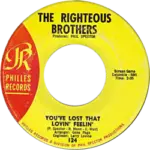
5. You’ve Lost That Lovin’ Feelin’ – The Righteous Brothers
“You’ve Lost That Lovin’ Feelin’” jumped from #9 to #5, beginning its move into the center of the national spotlight. The Righteous Brothers were bringing a deep, dramatic sound to the Top 5, and the record felt larger than a typical pop single.
Produced with a sweeping emotional style, the song built slowly and powerfully. Its vocal performance gave it a sense of heartbreak and intensity that helped define the blue-eyed soul sound.
This week’s move was a major signal of what was coming. The song would soon become one of the most memorable records of 1965 and one of the defining singles of The Righteous Brothers’ career.
▶ Watch and experience this song →
More Weeks at #1 for “Come See About Me”
This song spent multiple weeks at #1 on the Billboard Hot 100. Explore each chart week below:
🎂 What Was the #1 Song on Your Birthday?
If you were born during the week ending January 16, 1965, this was your birthday song:
🎵 Come See About Me by The Supremes
▶ Watch and experience this song →
🎂 Born in the 60s? Try your own birthday:
Top 10 on the Billboard Hot 100 This Week
- Come See About Me – The Supremes
- I Feel Fine – The Beatles
- Love Potion Number Nine – The Searchers
- Downtown – Petula Clark
- You’ve Lost That Lovin’ Feelin’ – The Righteous Brothers
- Mr. Lonely – Bobby Vinton
- The Jerk – The Larks
- Goin’ Out Of My Head – Little Anthony And The Imperials
- How Sweet It Is To Be Loved By You – Marvin Gaye
- Keep Searchin’ (We’ll Follow The Sun) – Del Shannon
Chart Movers This Week
Why This Chart Week Mattered
The January 16, 1965 chart mattered because it showed Motown reclaiming the top spot while several major 1965 records were gaining strength. “Come See About Me” returning to #1 confirmed The Supremes as one of the decade’s leading groups.
At the same time, the rise of “Downtown” and “You’ve Lost That Lovin’ Feelin’” pointed toward the next wave of hits. Both songs would become major parts of the year’s musical identity, but in very different ways: one bright and urban, the other dramatic and soulful.
This was a week where the chart felt balanced between the recent past and the near future. Former #1 hits were still visible, but new sounds were clearly taking over the upper reaches of the Hot 100.