Billboard Hot 100 | Top 5 – Week of January 4, 1960
The Billboard Hot 100 for the week ending January 4, 1960 marked the first chart of a brand-new decade and captured a fascinating moment in popular music history. Rock-and-roll, teen pop, country crossover hits, dramatic ballads, and novelty storytelling songs all battled for attention as America entered the 1960s.
At #1 was “El Paso” by Marty Robbins, the epic western storytelling ballad that became one of the most unique chart-toppers of the era. Its success proved that audiences still strongly connected with rich narrative songwriting even as rock-and-roll continued evolving.
Meanwhile, teen idol Frankie Avalon remained near the top with “Why,” while Johnny Preston’s dramatic “Running Bear” surged upward after slowly climbing the charts for months. The Top 5 also featured emotional heartbreak ballads and energetic New Orleans-inspired rock-and-roll, creating one of the most stylistically diverse charts of the early Billboard Hot 100 era.
The week of January 4, 1960 perfectly reflected the transition happening in American popular music. The polished pop sounds of the late 1950s still dominated much of radio, but deeper emotional storytelling and more dramatic production styles were beginning to shape the direction of the new decade.
Top 5 Songs (January 4, 1960)
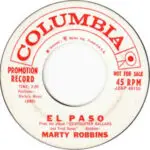
1. “El Paso” – Marty Robbins
Marty Robbins climbed to #1 with “El Paso,” one of the most ambitious and cinematic songs ever to top the Billboard Hot 100.
The western ballad told the dramatic story of love, jealousy, violence, and redemption in the Old West, combining country music storytelling with orchestral production and emotional depth rarely heard in mainstream pop music at the time.
Written by Robbins himself, the song became a landmark crossover success and helped prove that country-influenced storytelling records could dominate the national pop charts.
Even decades later, “El Paso” remains one of the most iconic story songs in American music history.
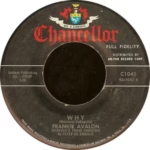
2. “Why” – Frankie Avalon
Frankie Avalon slipped to #2 with “Why” after previously holding the top position during the holiday season.
The emotional teen-pop ballad showcased Avalon’s smooth vocal style and polished production, helping solidify his place as one of the leading teen idols of the late 1950s and early 1960s.
The song’s continued success demonstrated how strongly teenage audiences were influencing the direction of popular music entering the new decade.
3. “The Big Hurt” – Miss Toni Fisher
Miss Toni Fisher held onto the #3 position with “The Big Hurt,” one of the most emotionally haunting records on the chart.
The song became especially notable for its early use of vocal distortion effects, creating a dramatic sound that stood apart from many traditional pop recordings of the period.
Its emotional vulnerability and unusual production helped make it one of the most distinctive heartbreak songs of the era.
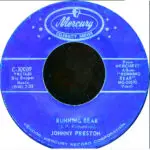
4. “Running Bear” – Johnny Preston
Johnny Preston climbed into the Top 5 with “Running Bear,” the dramatic storytelling hit written by J.P. Richardson, better known as The Big Bopper.
The song told a tragic love story inspired by Native American themes and became one of the biggest crossover hits of the era.
Its combination of spoken-word effects, emotional storytelling, and catchy melody helped it become one of the most memorable records of early 1960.
5. “Way Down Yonder In New Orleans” – Freddie Cannon
Freddie Cannon rounded out the Top 5 with “Way Down Yonder In New Orleans,” an energetic rock-and-roll update of the classic tune originally written in the 1920s.
The song’s driving beat, party atmosphere, and Cannon’s energetic vocal performance made it one of the most exciting records on radio during the winter of 1960.
Its success helped bridge traditional New Orleans musical influences with the growing rock-and-roll movement.
More Weeks at #1 for “El Paso”
This song spent multiple weeks at #1 on the Billboard Hot 100. Explore each chart week below:
🎂 What Was the #1 Song on Your Birthday?
If you were born during the week ending January 9, 1960, this was your birthday song:
🎵 El Paso by Marty Robbins
▶ Watch and experience this song →
🎂 Born in the 60s? Try your own birthday:
Billboard Hot 100 Top 10 – Week of January 4, 1960
- El Paso – Marty Robbins
- Why – Frankie Avalon
- The Big Hurt – Miss Toni Fisher
- Running Bear – Johnny Preston
- Way Down Yonder In New Orleans – Freddie Cannon
- Heartaches By The Number – Guy Mitchell
- It’s Time To Cry – Paul Anka
- Among My Souvenirs – Connie Francis
- Pretty Blue Eyes – Steve Lawrence
- Go, Jimmy, Go – Jimmy Clanton
The First Billboard Chart of the 1960s Captured a Musical Transition
The Billboard Hot 100 for January 4, 1960 perfectly captured the musical crossroads America found itself in at the dawn of a new decade.
Country storytelling epics like “El Paso” shared chart space with polished teen-pop ballads, experimental heartbreak records, dramatic narrative songs, and energetic rock-and-roll party anthems.
The chart reflected a music industry that was rapidly expanding stylistically. Traditional pop influences still remained strong, but audiences were increasingly embracing deeper emotional themes, cinematic storytelling, and more ambitious production styles.
Many of the artists featured on this chart — including Marty Robbins, Frankie Avalon, Connie Francis, and Paul Anka — would help define the sound of popular music during the early years of the 1960s before the British Invasion dramatically changed the musical landscape later in the decade.
The week of January 4, 1960 remains one of the most fascinating early Billboard Hot 100 charts because it captures the exact moment where the innocence of the 1950s began evolving into the more emotionally sophisticated sound of the 1960s.