The 1960s was one of the most important decades in music history. In just ten short years, popular music changed more dramatically than it had in the previous several decades combined. The decade began with clean-cut pop stars, teen idols, and doo-wop groups carrying over from the 1950s. By the end of the 1960s, music had evolved into something entirely different, featuring psychedelic experimentation, powerful social messages, groundbreaking recording techniques, and artists who would become legends.
The 1960s gave the world some of the greatest songs ever recorded. It was the decade of Beatlemania, Motown, surf music, folk protest songs, soul music, and the British Invasion. Radio stations played a constant stream of unforgettable hits, and millions of Americans followed the latest songs climbing the Billboard charts. Whether you listened on a transistor radio, spun records on a turntable, or danced at a school gymnasium, the music of the 1960s became the soundtrack of a generation.
What makes the decade so remarkable is the incredible variety of music that emerged. The sounds of Detroit, Liverpool, Los Angeles, Memphis, Nashville, New York, and San Francisco all helped shape popular culture. Artists constantly pushed creative boundaries, and audiences eagerly followed them into new musical territory.
Today, the music of the 1960s continues to influence artists, movies, television shows, commercials, and radio stations around the world. More than fifty years later, many of these songs remain instantly recognizable. The decade produced timeless classics that continue to connect generations through shared memories and unforgettable melodies.
Let’s explore the sounds, artists, and movements that made the 1960s one of the greatest eras in music history.
Motown: The Sound That Changed America
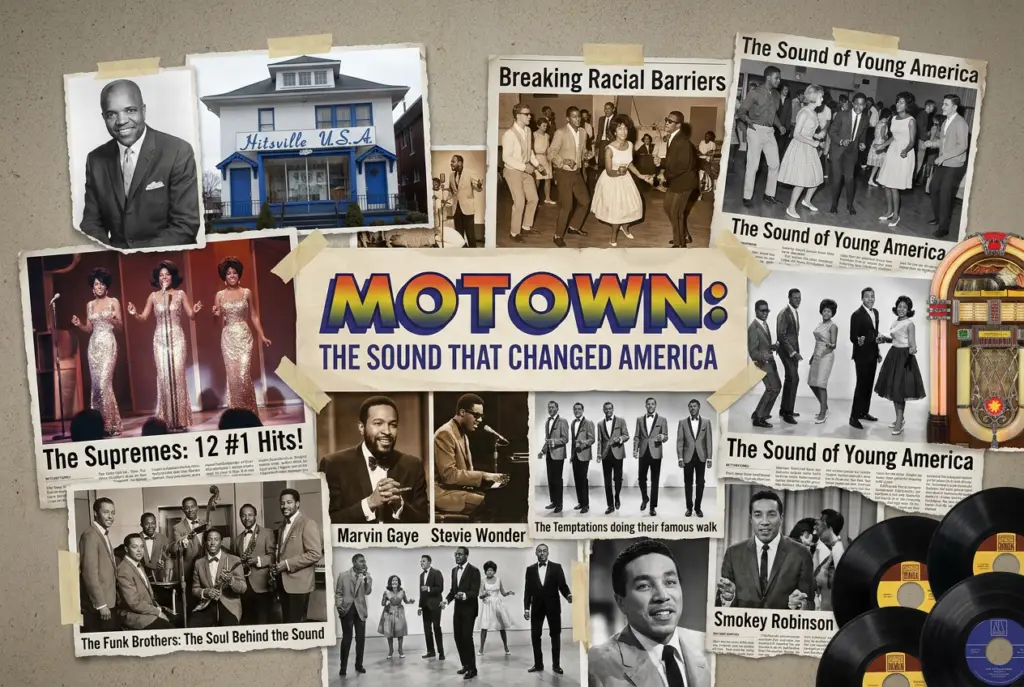
Few record labels have had as much influence on popular music as Motown Records. Founded by Berry Gordy in Detroit in 1959, Motown quickly became one of the most successful music companies in history. Gordy’s vision was simple: create music that could appeal to everyone regardless of age, race, or background.
The result was a polished, energetic sound that became known as “The Sound of Young America.”
Motown’s success came from an incredible assembly line of talent. Songwriters, producers, musicians, and singers worked together to create hit after hit. Behind many of those recordings were the legendary Funk Brothers, a group of studio musicians who performed on countless Motown classics.
The label introduced audiences to some of the greatest artists of the decade. The Supremes became Motown’s biggest act, scoring twelve Billboard Hot 100 number-one hits during the 1960s. Led by Diana Ross, the group dominated radio with songs like “Where Did Our Love Go,” “Baby Love,” and “Stop! In the Name of Love.“
Other Motown stars included Marvin Gaye, Stevie Wonder, The Temptations, Four Tops, Martha and the Vandellas, Smokey Robinson and the Miracles, and Junior Walker and the All Stars. Each brought their own style while maintaining the signature Motown sound.
Motown was more than just a record label. It became a symbol of progress during a decade marked by significant social change. Its success helped break racial barriers in popular music and introduced Black artists to mainstream audiences across America and around the world.
Many Motown songs remain staples of oldies radio today, proving the lasting power of the label’s music and influence.
The British Invasion: When Britain Conquered American Radio
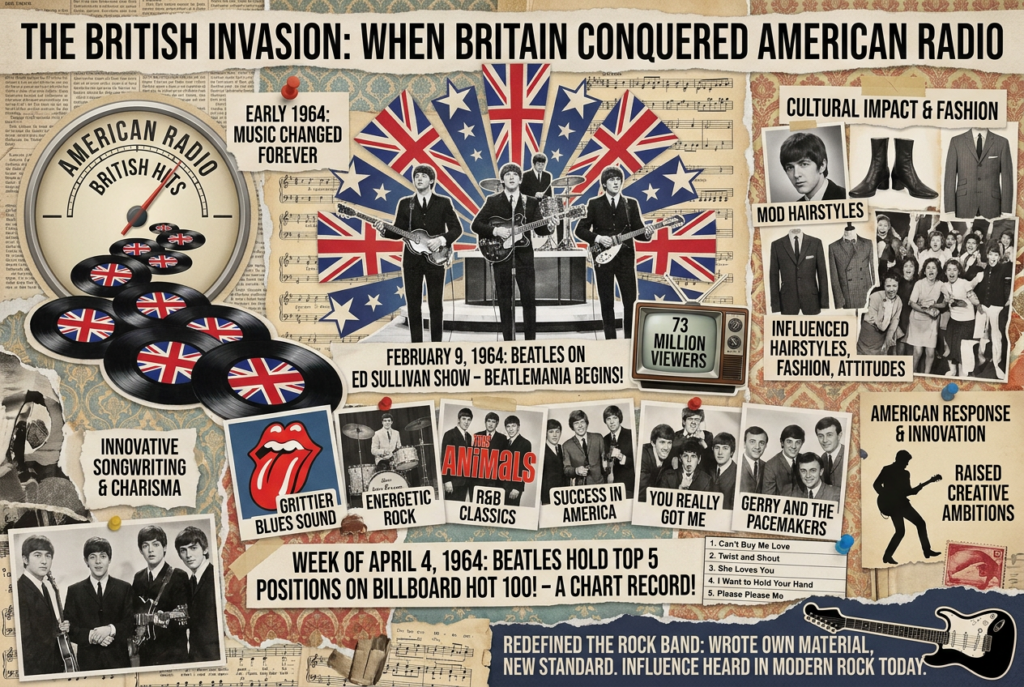
In early 1964, American music changed forever.
On February 9, 1964, millions of viewers watched The Beatles perform on The Ed Sullivan Show. The appearance sparked Beatlemania and opened the door for a wave of British artists who would dominate the charts throughout the decade.
The British Invasion was led by The Beatles, whose innovative songwriting, charismatic personalities, and evolving musical style transformed popular music. Songs such as “I Want to Hold Your Hand,” “A Hard Day’s Night,” “Help!,” “Yesterday,” and “Hey Jude” became defining records of the era.
Soon other British groups followed. The Rolling Stones brought a grittier blues-inspired sound. The Dave Clark Five offered energetic rock and roll. The Animals introduced audiences to powerful interpretations of rhythm and blues classics. Herman’s Hermits, The Kinks, The Searchers, Manfred Mann, and many others found success in America.
The impact of the British Invasion extended beyond music. Hairstyles, fashion, attitudes, and culture all felt the influence of these artists. American musicians responded by raising their own creative ambitions, leading to even greater competition and innovation.
One of the most remarkable moments occurred during the week of April 4, 1964, when The Beatles held the top five positions on the Billboard Hot 100 simultaneously—an achievement that remains one of the most famous chart records in music history.
The British Invasion helped redefine what a rock band could be. Instead of relying on professional songwriters, many groups wrote their own material, setting a new standard for future artists.
The influence of these bands can still be heard in modern rock music today.
Surf Rock: California’s Musical Wave
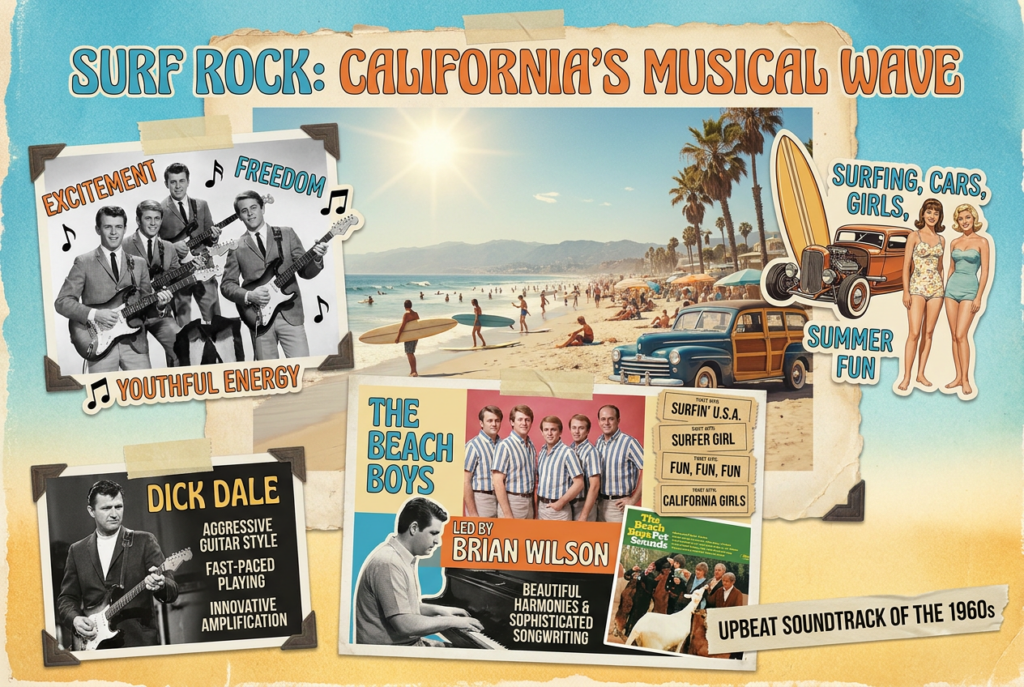
While British bands were conquering America, another sound was emerging from the sunny beaches of Southern California.
Surf rock captured the excitement, freedom, and youthful energy of the California lifestyle. The music often featured twangy electric guitars, catchy melodies, and lyrics about surfing, cars, girls, and summer fun.
No group represented surf rock better than The Beach Boys. Led by Brian Wilson, the band combined beautiful harmonies with sophisticated songwriting. Early hits such as “Surfin’ U.S.A.,” “Good Vibrations,” “I Get Around,” and “California Girls” painted an idealized picture of West Coast life.
As the decade progressed, The Beach Boys evolved beyond traditional surf music. Their groundbreaking 1966 album Pet Sounds is widely regarded as one of the greatest albums ever recorded and influenced countless musicians, including The Beatles.
Instrumental surf music also became popular through artists like Dick Dale, whose aggressive guitar style helped define the genre. His fast-paced playing and innovative use of amplification created a sound unlike anything audiences had heard before.
Surf rock provided an upbeat soundtrack during the early years of the decade. Even listeners who had never seen the Pacific Ocean could imagine themselves riding waves under the California sun.
Though its popularity faded as musical tastes changed, surf rock remains one of the most recognizable sounds of the 1960s.
Folk Rock: Music With Something to Say
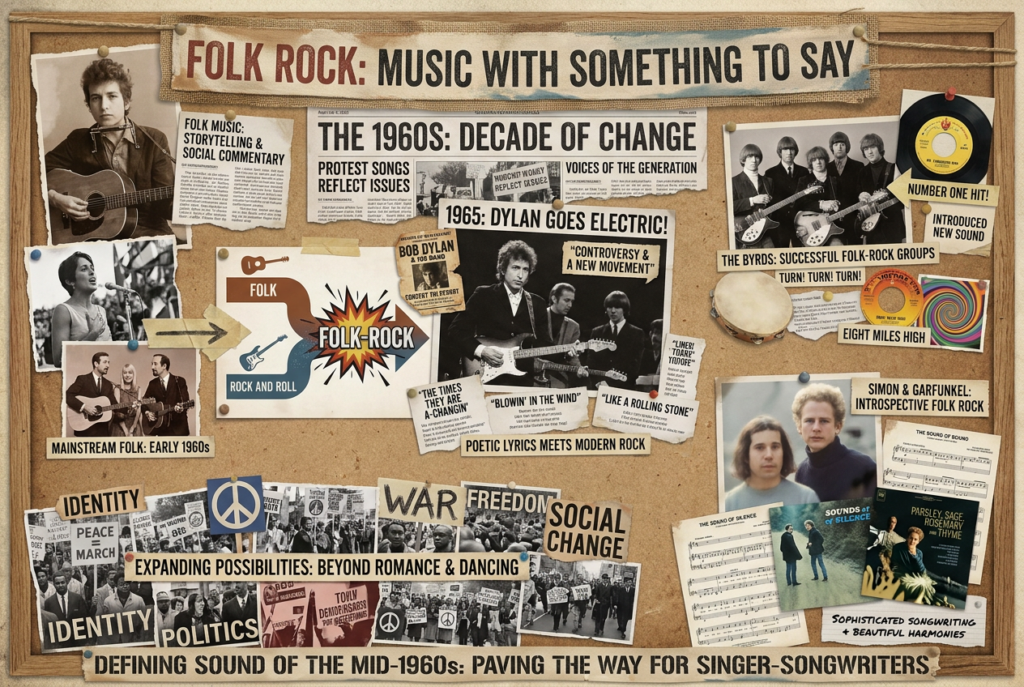
The 1960s were a decade of change, and many musicians used their songs to reflect the issues of the time.
Folk music had long been associated with storytelling and social commentary. Artists like Bob Dylan, Joan Baez, and Peter, Paul and Mary helped bring folk music into the mainstream during the early 1960s.
Everything changed when folk music merged with rock and roll.
In 1965, Bob Dylan famously began performing with electric instruments, creating controversy among traditional folk fans but helping launch the folk-rock movement. His songs combined poetic lyrics with modern rock arrangements, influencing countless musicians.
The Byrds became one of the most successful folk-rock groups. Their version of Dylan’s “Mr. Tambourine Man” reached number one and introduced many listeners to the new sound. Other notable hits included “Turn! Turn! Turn! (To Everything There Is a Season)” and “Eight Miles High.”
Simon & Garfunkel brought a softer, more introspective approach to folk rock. Songs such as “The Sound of Silence,” “Homeward Bound,” and “Mrs. Robinson” showcased sophisticated songwriting and beautiful vocal harmonies.
Folk rock helped expand the possibilities of popular music. Songs no longer had to focus only on romance or dancing. Artists explored themes of identity, politics, war, freedom, and social change.
The genre became one of the defining sounds of the mid-1960s and helped pave the way for many singer-songwriters who followed.
Psychedelic Rock: Expanding Musical Boundaries
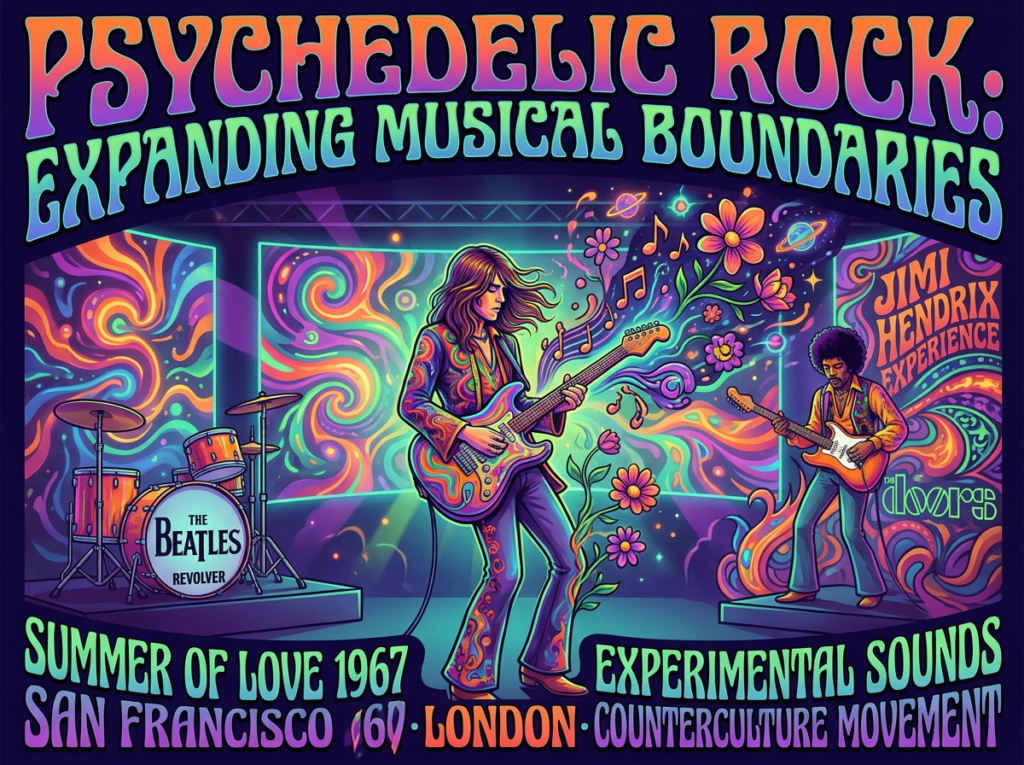
By the mid-1960s, popular music was changing rapidly. Artists were no longer satisfied with writing simple love songs or following traditional recording methods. Inspired by new ideas, changing social attitudes, and advances in studio technology, musicians began creating sounds that seemed to transport listeners into entirely new worlds.
This movement became known as psychedelic rock.
The genre emerged primarily in cities like San Francisco, Los Angeles, and London. Psychedelic music often featured experimental sounds, extended instrumental sections, unusual recording effects, and lyrics that encouraged listeners to think beyond everyday experiences.
One of the earliest and most influential psychedelic albums was The Beatles’ Revolver in 1966. Songs like “Tomorrow Never Knows” introduced sounds and recording techniques that had rarely been heard in mainstream music. The following year, Sgt. Pepper’s Lonely Hearts Club Band helped redefine what a rock album could be and remains one of the most celebrated recordings in history.
Other artists quickly embraced experimentation. The Doors blended rock, blues, and poetry into dramatic performances led by Jim Morrison. Jefferson Airplane became one of San Francisco’s most recognizable bands with songs like “Somebody to Love” and “White Rabbit.” The Jimi Hendrix Experience stunned audiences with Hendrix’s groundbreaking guitar work, while Cream showcased the talents of Eric Clapton, Jack Bruce, and Ginger Baker.
Psychedelic rock was closely connected to the counterculture movement of the late 1960s. Music festivals, colorful artwork, and a spirit of creativity became important parts of the genre’s identity. The famous Summer of Love in 1967 helped bring psychedelic music to national attention.
As the decade progressed, psychedelic rock influenced many other genres, including progressive rock, hard rock, and heavy metal. While the movement’s peak lasted only a few years, its impact on music remains enormous. Many of the most innovative recording techniques used today can trace their roots back to the experiments of psychedelic artists during the 1960s.
Soul Music: Emotion, Power, and Passion
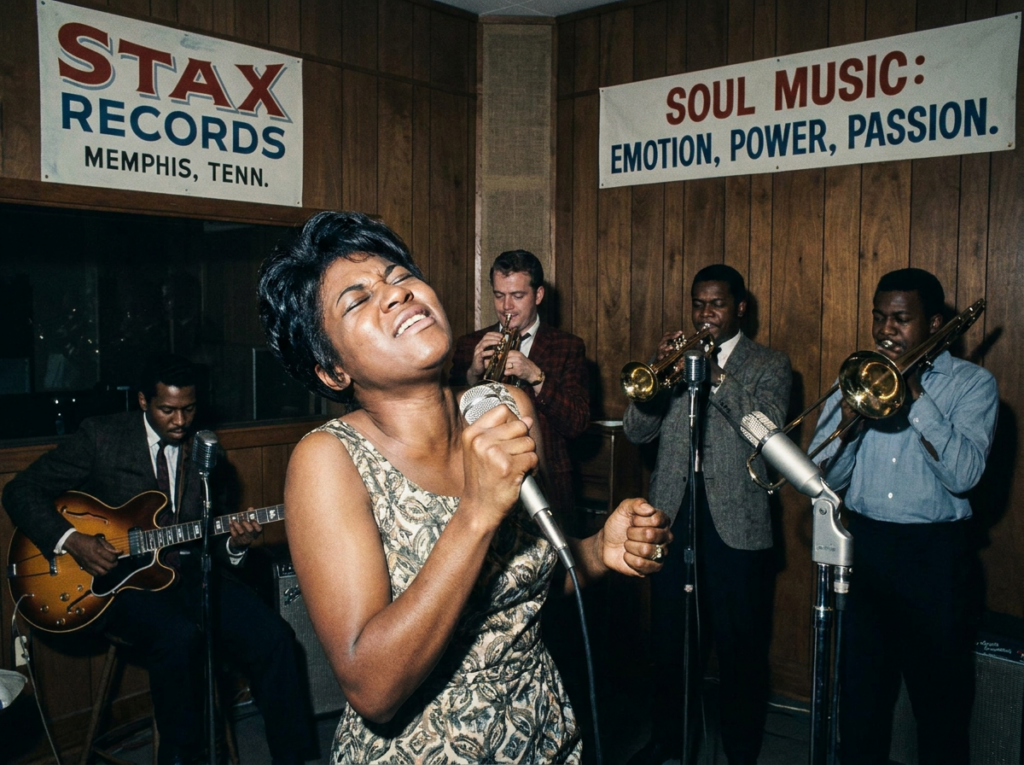
If Motown represented polished pop perfection, soul music represented raw emotion and powerful expression.
Soul music grew from gospel, rhythm and blues, and church traditions. It emphasized strong vocals, emotional delivery, and deeply personal performances. Many soul singers had learned to sing in church, bringing that passion and intensity into popular music.
One of the greatest soul artists of the decade was Aretha Franklin. Known as the “Queen of Soul,” Franklin transformed songs like “Respect,” “Chain of Fools,” and “Think” into powerful anthems that remain classics today. Her voice could be tender one moment and commanding the next, making her one of the most influential singers in music history.
Another giant of soul music was Otis Redding. His heartfelt performances and unforgettable songs, including “(Sittin’ On) The Dock of the Bay,” showcased the emotional depth that defined the genre. Although Redding’s life was tragically cut short in 1967, his influence continues to be felt decades later.
Wilson Pickett brought energy and excitement with hits like “In the Midnight Hour” and “Mustang Sally.” Sam and Dave became famous for crowd-pleasing songs such as “Soul Man” and “Hold On, I’m Comin’.” Meanwhile, artists like Percy Sledge, Joe Tex, and Carla Thomas added their own unique styles to the growing soul movement.
Many of these recordings came from Stax Records in Memphis, Tennessee. Stax developed a distinct sound that contrasted with Motown’s polished production. The music often felt grittier, more spontaneous, and deeply rooted in Southern traditions.
Soul music also played an important role during the Civil Rights Movement. Many artists used their music to express pride, hope, and determination during a period of significant social change.
Today, soul music remains one of the most respected genres in American music history. Its influence can be heard in modern R&B, pop, gospel, and even rock music.
Girl Groups: The Voices That Defined a Generation
One of the most beloved sounds of the early and mid-1960s came from the girl groups that dominated radio stations across America.
These groups combined beautiful harmonies, memorable melodies, and songs that spoke directly to teenage audiences. Their recordings captured the excitement, heartbreak, dreams, and emotions of young people growing up during the decade.
Among the earliest and most influential were The Shirelles. Their 1961 hit “Will You Love Me Tomorrow” became the first Billboard Hot 100 number-one song by an all-female group. The song demonstrated that girl groups could achieve both commercial success and critical acclaim.
Soon many others followed.
The Ronettes became famous for their distinctive style and the powerful voice of Ronnie Spector. Songs such as “Be My Baby” showcased the famous Wall of Sound production created by Phil Spector and remain some of the most celebrated recordings of the decade.
The Crystals delivered hits including “Da Doo Ron Ron” and “Then He Kissed Me,” while The Chiffons found success with “He’s So Fine.” Martha and the Vandellas blended girl-group harmonies with Motown’s energetic sound on songs like “Dancing in the Street.”
No group achieved greater success than The Supremes. Led by Diana Ross, Mary Wilson, and Florence Ballard, the group became one of the biggest acts in music history. Their string of number-one hits helped make them international superstars and established Motown as a dominant force in popular music.
Girl groups influenced fashion, culture, and future generations of performers. Their success helped pave the way for countless female artists who followed.
Many of their recordings continue to appear in movies, television programs, commercials, and playlists because their songs remain timeless examples of great pop music.
Billboard and the Hot 100: Measuring America’s Favorite Songs
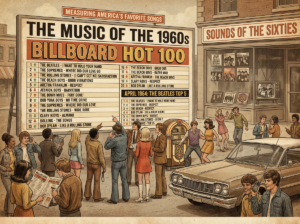
To understand the music of the 1960s, it is impossible to ignore the importance of Billboard magazine and the Billboard Hot 100.
The Hot 100 officially debuted in August 1958 and quickly became the most important measure of a song’s popularity in America. The chart combined record sales and radio airplay to determine which songs were connecting with audiences across the country.
For artists, reaching the Hot 100 was an accomplishment. Reaching the Top 10 was a major achievement. Reaching number one meant joining music history.
Throughout the 1960s, the Hot 100 documented every major trend and movement in popular music. It captured the rise of Motown, the arrival of the British Invasion, the popularity of surf rock, the growth of soul music, and the explosion of psychedelic rock.
The decade produced some of the most remarkable chart moments ever recorded.
The Beatles dominated the charts unlike any group before them. In April 1964, they famously occupied the top five positions on the Hot 100 simultaneously. The achievement remains one of the most astonishing accomplishments in chart history.
The Supremes became the most successful American group of the decade, while artists such as Elvis Presley, The Rolling Stones, The Beach Boys, and The Temptations consistently filled the charts with hit records.
The Hot 100 also revealed changing tastes among listeners. Early in the decade, teen idols and vocal groups remained popular. By the middle years, British bands and folk-rock artists took center stage. By the end of the decade, listeners embraced more experimental and diverse musical styles.
For millions of fans, following the weekly chart became a ritual. Radio listeners eagerly waited to see whether their favorite songs would climb higher, hold their positions, or be replaced by new hits.
Today, the Billboard Hot 100 serves as a remarkable historical record of the decade. Every chart tells a story about what Americans were listening to, talking about, and singing along with during a transformative period in music history.
Why 1960s Music Still Matters Today
More than half a century later, the music of the 1960s continues to inspire listeners around the world.
The decade produced an extraordinary collection of songs that have stood the test of time. Whether it’s the harmony of The Beach Boys, the innovation of The Beatles, the emotion of Aretha Franklin, the energy of Motown, or the storytelling of folk rock, the music remains as powerful today as it was when it first appeared on radio stations and record players.
The artists of the 1960s changed more than music. They influenced fashion, culture, social movements, technology, and the way records were made. Many of the techniques, sounds, and songwriting approaches developed during the decade continue to shape modern music.
Perhaps most importantly, 1960s music creates connections between generations. Grandparents, parents, and younger listeners can all find something to enjoy in these timeless recordings. A great song from 1965 can still create memories, spark conversations, and bring people together in ways that few other forms of entertainment can.
The 1960s were more than just a decade. They were a musical revolution.
And thanks to the artists, songs, and charts that defined the era, that revolution continues every time someone drops a needle on a record, turns on an oldies station, or discovers a classic song for the very first time.
The soundtrack of the 1960s is still playing—and millions of listeners are still singing along.